3 Key Secrets to Achieving Realism in Your Drawings and Paintings
Why Believable Proportions and Scale Are Non-Negotiable for Realism
Mastering a Natural Range of Tonal Values & More
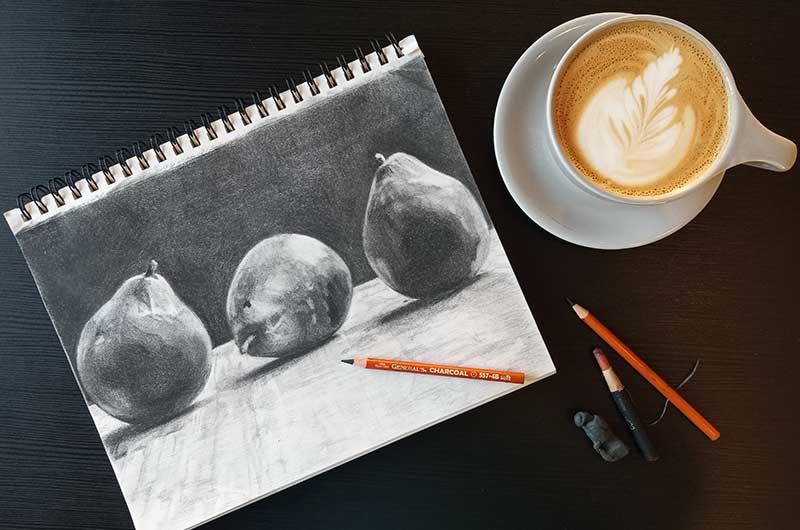
3 Tips For Achieving Realism In Art- Create Believable Proportions
- A Natural Range of Tonal Values
- Mix Natural-Looking Paint Colors
Why Believable Proportions and Scale Are Non-Negotiable for Realism
Proportion is a fundamental principle of art that cannot be overlooked. It defines the size of one feature in relation to another. For instance, if the eyes are drawn too large on a face, it’s going to look unnatural. Similarly, if hands are disproportionately big compared to the rest of the body, the artwork will feel out of sync.
To achieve true realism, you must master your proportions. They don’t have to be perfect, but they must be credible. Scale is also crucial; it refers to how the size of an object compares to other objects. If an object is overscaled in its environment, it disrupts the realism. Drawing and painting objects at the correct size is vital.
Mastering a Natural Range of Tonal Values: Subtle Lights, Darks, and Mid-Tones
Tonal value, which pertains to lightness and darkness, is critical. If your darks are excessively dark or your lights are too bright, your artwork will resemble an illustration rather than a realistic piece.
A natural range of tonal values is essential for creating the illusion of realism. Values can be subtler than you think. Observe the nuances of light and shadow; they are key to establishing a value range that feels natural and realistic.
Mixing Natural-Looking Colors: Neutralize Tube Colors for Authentic Hues
Stop using paint straight from the tube—it’s often overly bright and saturated. To convey realism, you must work with more subdued, natural colors. Mastering the neutralization of paint colors is indispensable for bringing your vision to life.
For example, green paint straight from the tube may look garish. By adding a small amount of red, you can create a much more natural green. Understanding how to mix natural colors is essential for any realistic painting.
My Personal Journey: Overcoming Vague Art Advice and Discovering These Principles
I wanted my drawings and paintings to look realistic, but I often felt they fell short. When I sought advice from professors and other artists, their responses were usually vague, suggesting that I should "embrace my style."
No one seemed to know how I could improve. In retrospect, I realize they may not have had the answers either. The modern art education system can be quite flawed, leaving me overwhelmed with information but without a clear path forward.
After extensive analysis, research, and struggle, I identified three simple yet crucial aspects that must be addressed. If you overlook even one of these, your work will not look realistic. The human eye is highly skilled at recognizing patterns, especially in human faces. If the proportions are not believable, viewers will instinctively sense that something is off. While they may not be able to articulate what is wrong, they will definitely notice that something isn't right.
Artists often take pride in being unique and original. However, realism fundamentally requires accurately reflecting the reality of the person, place, or object you are depicting.
The Bottom Line: Realism Means Faithful Copying of Reality
Here's the bottom line: Distorting or elongating forms will make them look unrealistic. If your proportions are too large, too small, or otherwise skewed, they won't appear authentic. Similarly, if your dark areas are overly dark or your light areas excessively bright, the result will tend to resemble illustration or cartoon rather than realistic art. Additionally, using bright, saturated colors instead of subtle, natural hues can undermine the sense of realism in your work.
Take Control: Address These Three Areas to Level Up Your Art
Failing to accurately replicate reality means failing to create realism.
If your work lacks in any of these critical areas, now's the time to address it. I haven't perfected all of this yet, but I've made significant progress since uncovering these key principles.
I call them “secrets” because, despite my art education, I didn't learn these essential concepts. Professors often examined my work but struggled to pinpoint these three issues—a frustrating reality, yet one I learned to navigate.
Now that you are aware of these three essential elements, take charge and fix them. If you can tackle this on your own, fantastic! If you need further assistance, stay tuned for my upcoming guide on drawing and painting realistic artwork.
As a contemporary realist artist, you're an observer, designer, and visionary. You're a creative maker, an artisan, well on your way to mastering your craft.
No lack of resources, support, or lack of education can stop you. The most likely obstacle you'll encounter on your way to mastery will be you. It's time to get out of your own way.
I'm trying to take my work to new levels. I'm sharing everything I learn along the way. My goal is to help you take your art to a higher level.
Related Topics:
Why Believable Proportions and Scale Are Non-Negotiable for Realism
Proportion is a fundamental principle of art that cannot be overlooked. It defines the size of one feature in relation to another. For instance, if the eyes are drawn too large on a face, it’s going to look unnatural. Similarly, if hands are disproportionately big compared to the rest of the body, the artwork will feel out of sync.
To achieve true realism, you must master your proportions. They don’t have to be perfect, but they must be credible. Scale is also crucial; it refers to how the size of an object compares to other objects. If an object is overscaled in its environment, it disrupts the realism. Drawing and painting objects at the correct size is vital.
Mastering a Natural Range of Tonal Values: Subtle Lights, Darks, and Mid-Tones
Tonal value, which pertains to lightness and darkness, is critical. If your darks are excessively dark or your lights are too bright, your artwork will resemble an illustration rather than a realistic piece.
A natural range of tonal values is essential for creating the illusion of realism. Values can be subtler than you think. Observe the nuances of light and shadow; they are key to establishing a value range that feels natural and realistic.
Mixing Natural-Looking Colors: Neutralize Tube Colors for Authentic Hues
Stop using paint straight from the tube—it’s often overly bright and saturated. To convey realism, you must work with more subdued, natural colors. Mastering the neutralization of paint colors is indispensable for bringing your vision to life.
For example, green paint straight from the tube may look garish. By adding a small amount of red, you can create a much more natural green. Understanding how to mix natural colors is essential for any realistic painting.
My Personal Journey: Overcoming Vague Art Advice and Discovering These Principles
I wanted my drawings and paintings to look realistic, but I often felt they fell short. When I sought advice from professors and other artists, their responses were usually vague, suggesting that I should "embrace my style."
No one seemed to know how I could improve. In retrospect, I realize they may not have had the answers either. The modern art education system can be quite flawed, leaving me overwhelmed with information but without a clear path forward.
After extensive analysis, research, and struggle, I identified three simple yet crucial aspects that must be addressed. If you overlook even one of these, your work will not look realistic. The human eye is highly skilled at recognizing patterns, especially in human faces. If the proportions are not believable, viewers will instinctively sense that something is off. While they may not be able to articulate what is wrong, they will definitely notice that something isn't right.
Artists often take pride in being unique and original. However, realism fundamentally requires accurately reflecting the reality of the person, place, or object you are depicting.
The Bottom Line: Realism Means Faithful Copying of Reality
Here's the bottom line: Distorting or elongating forms will make them look unrealistic. If your proportions are too large, too small, or otherwise skewed, they won't appear authentic. Similarly, if your dark areas are overly dark or your light areas excessively bright, the result will tend to resemble illustration or cartoon rather than realistic art. Additionally, using bright, saturated colors instead of subtle, natural hues can undermine the sense of realism in your work.
Take Control: Address These Three Areas to Level Up Your Art
Failing to accurately replicate reality means failing to create realism.
If your work lacks in any of these critical areas, now's the time to address it. I haven't perfected all of this yet, but I've made significant progress since uncovering these key principles.
I call them “secrets” because, despite my art education, I didn't learn these essential concepts. Professors often examined my work but struggled to pinpoint these three issues—a frustrating reality, yet one I learned to navigate.
Now that you are aware of these three essential elements, take charge and fix them. If you can tackle this on your own, fantastic! If you need further assistance, stay tuned for my upcoming guide on drawing and painting realistic artwork.
As a contemporary realist artist, you're an observer, designer, and visionary. You're a creative maker, an artisan, well on your way to mastering your craft.
No lack of resources, support, or lack of education can stop you. The most likely obstacle you'll encounter on your way to mastery will be you. It's time to get out of your own way.
I'm trying to take my work to new levels. I'm sharing everything I learn along the way. My goal is to help you take your art to a higher level.
Why Believable Proportions and Scale Are Non-Negotiable for Realism
Proportion is a fundamental principle of art that cannot be overlooked. It defines the size of one feature in relation to another. For instance, if the eyes are drawn too large on a face, it’s going to look unnatural. Similarly, if hands are disproportionately big compared to the rest of the body, the artwork will feel out of sync.
To achieve true realism, you must master your proportions. They don’t have to be perfect, but they must be credible. Scale is also crucial; it refers to how the size of an object compares to other objects. If an object is overscaled in its environment, it disrupts the realism. Drawing and painting objects at the correct size is vital.
Mastering a Natural Range of Tonal Values: Subtle Lights, Darks, and Mid-Tones
Tonal value, which pertains to lightness and darkness, is critical. If your darks are excessively dark or your lights are too bright, your artwork will resemble an illustration rather than a realistic piece.
A natural range of tonal values is essential for creating the illusion of realism. Values can be subtler than you think. Observe the nuances of light and shadow; they are key to establishing a value range that feels natural and realistic.
Mixing Natural-Looking Colors: Neutralize Tube Colors for Authentic Hues
Stop using paint straight from the tube—it’s often overly bright and saturated. To convey realism, you must work with more subdued, natural colors. Mastering the neutralization of paint colors is indispensable for bringing your vision to life.
For example, green paint straight from the tube may look garish. By adding a small amount of red, you can create a much more natural green. Understanding how to mix natural colors is essential for any realistic painting.
My Personal Journey: Overcoming Vague Art Advice and Discovering These Principles
I wanted my drawings and paintings to look realistic, but I often felt they fell short. When I sought advice from professors and other artists, their responses were usually vague, suggesting that I should "embrace my style."
No one seemed to know how I could improve. In retrospect, I realize they may not have had the answers either. The modern art education system can be quite flawed, leaving me overwhelmed with information but without a clear path forward.
After extensive analysis, research, and struggle, I identified three simple yet crucial aspects that must be addressed. If you overlook even one of these, your work will not look realistic. The human eye is highly skilled at recognizing patterns, especially in human faces. If the proportions are not believable, viewers will instinctively sense that something is off. While they may not be able to articulate what is wrong, they will definitely notice that something isn't right.
Artists often take pride in being unique and original. However, realism fundamentally requires accurately reflecting the reality of the person, place, or object you are depicting.
The Bottom Line: Realism Means Faithful Copying of Reality
Here's the bottom line: Distorting or elongating forms will make them look unrealistic. If your proportions are too large, too small, or otherwise skewed, they won't appear authentic. Similarly, if your dark areas are overly dark or your light areas excessively bright, the result will tend to resemble illustration or cartoon rather than realistic art. Additionally, using bright, saturated colors instead of subtle, natural hues can undermine the sense of realism in your work.
Take Control: Address These Three Areas to Level Up Your Art
Failing to accurately replicate reality means failing to create realism.
If your work lacks in any of these critical areas, now's the time to address it. I haven't perfected all of this yet, but I've made significant progress since uncovering these key principles.
I call them “secrets” because, despite my art education, I didn't learn these essential concepts. Professors often examined my work but struggled to pinpoint these three issues—a frustrating reality, yet one I learned to navigate.
Now that you are aware of these three essential elements, take charge and fix them. If you can tackle this on your own, fantastic! If you need further assistance, stay tuned for my upcoming guide on drawing and painting realistic artwork.
As a contemporary realist artist, you're an observer, designer, and visionary. You're a creative maker, an artisan, well on your way to mastering your craft.
No lack of resources, support, or lack of education can stop you. The most likely obstacle you'll encounter on your way to mastery will be you. It's time to get out of your own way.
I'm trying to take my work to new levels. I'm sharing everything I learn along the way. My goal is to help you take your art to a higher level.
Related Topics: