How to Hold Your Pencil Properly for Different Drawing Techniques (and Why It Matters)
Overcoming Heavy-Handed Drawing with Simple Grip Adjustments
Best Grips for Lighter Lines, Loose Sketches, and Layered Shading
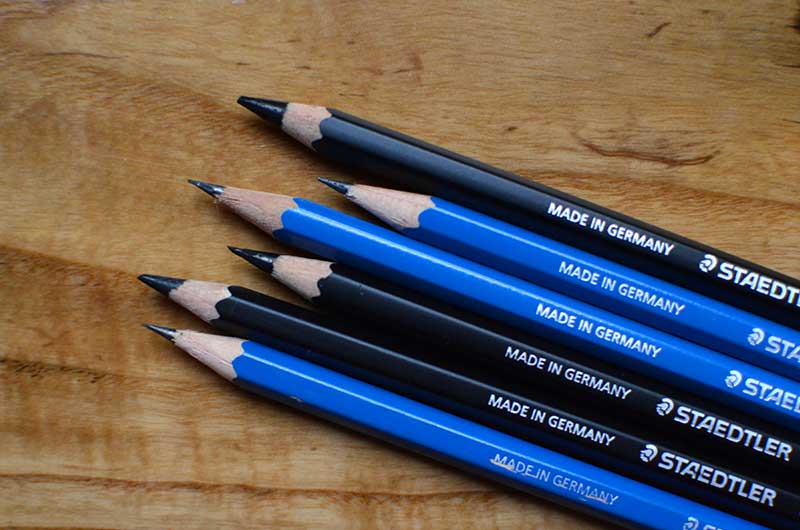
Why Your Pencil Grip Matters for Realistic Drawing
Regardless of how you hold your pencil, it's common for your hand to revert to old habits. The key is to find a grip that suits the lines you want to create. For example, I tend to be heavy-handed, which leads to darker lines. The pressure you apply with charcoal or graphite affects every line you draw. Pressing hard creates bold, thick lines, while a lighter touch allows you to build up soft, gentle layers.
How to Soften Heavy-Handed Drawing:
A physics principle that explains this is torque, which involves a lever arm.
Explanation:
When you hold a pencil and press it downward onto paper, your fingers apply a downward force. The distance from where you apply the force, your grip, to the pencil tip in contact with the paper is important.
Understanding Torque and Lever Arm: The Physics Behind Your Grip
Torque refers to a rotational force, which you can think of as a twisting motion. It is directly proportional to the lever arm, which in this example is the length of a pencil. A longer pencil creates a greater turning effect, meaning we have less control over it. This can lead to less precise marks, especially if applying more pressure while drawing. You can try this out for yourself to see the effect firsthand.
Short Lever Arm (Close Grip): More Pressure and Darker Lines
If you hold the pencil close to the sharpened tip, the lever arm is short. This short distance helps keep the pencil stable and prevents unwanted tilting, but you naturally apply more downward force at the tip. This increased force results in higher pressure on the paper, which deposits more graphite and makes darker lines.
Long Lever Arm (Far Grip): Lighter Touch and Greater Stability
Holding a pencil farther from the tip increases the length of the lever arm. This makes it easier for even a small force from your fingers to create enough torque to tilt the pencil. To counteract this and maintain control and stability, you instinctively apply less overall force, leading to lighter pressure at the tip. As a result, holding the pencil farther back usually produces lighter marks.
Best Grips for Lighter Lines, Loose Sketches, and Layered Shading
Gripping the pencil farther back often lets you create more fluid, sketch-like strokes, while gripping closer to the tip enables precise, bold, or dark lines but requires more conscious pressure control. It’s a balance of stability, control, and mechanical advantage!
Experiment with Different Grips for Fluid Strokes
To gain more control over heavy-handed drawing, try holding your pencil farther from the tip, near the eraser. This simple adjustment can help you maintain a lighter touch. If your pencil becomes too short, consider using a pencil extender to give yourself more length. Holding your pencil at the end of the extender allows for lighter and looser strokes, which are great for gradually building up layers of shading.
Many of us naturally hold our pencils close to the tip, as we learned in school, but breaking that habit may enhance our drawing. For even looser, more expressive lines, experiment with holding your pencil at the very end. Allow it to move freely from side to side for light sketches and gentle shading.
Practice Slowly to Retrain Your Hand Muscle Memory
The key to improving any skill is practice. Draw slowly and pay attention to how you hold your pencil. Just a few minutes of focused practice each day can help your hand remember what to do, even when you're not consciously thinking about it. Like a dancer repeating steps until they become second nature, you can train your hand to move the way you want it to.
No One-Size-Fits-All – Find the Grip That Fits Your Style
There is no single perfect way to hold a pencil. Your habits and mark-making will significantly influence your unique art style. If you desire lighter lines, hold your pencil farther back and keep the tip sharp for thin, light marks. A pencil extender can help with this, and for smooth, sweeping lines, try holding your pencil upside down between your thumb, index, and middle finger.
The Physics & Motor Science of Pencil Grip
Pencil grip directly influences applied pressure through torque and lever arm mechanics. A short grip (near the pencil tip) minimizes lever arm length, requiring greater finger force for stability. This may result in higher downward pressure on the paper, more graphite gets deposited, and the result is thicker lines. A long grip (far back or with extender) increases lever arm, amplifying rotational effect of small finger movements. Instinctive compensation reduces the overall force to maintain control, yielding lighter pressure, thinner marks, and softer layering. Extenders can restore lever advantage on short pencils, preserving light-touch benefits. Retraining your grip rewires muscle memory while slow practice strengthens new motor patterns, making lighter habits automatic. No universal "best" grip exists. Optimal hold balances stability, control, and desired mark quality, allowing artists to match tool to intention (precise detail vs expressive shading) for more realistic, controlled, and varied pencil work.
Conclusion: Small Grip Changes = Possible Improvement in Realism
I hope these tips prove helpful. Keep practicing. I'm cheering for you!
Credit & Further Reading
The physics explanation of torque and lever arm in relation to pencil grip is based on material from: True Geometry Blog – Explore: Pencil Holding Physics All drawing tips and personal experiences shared here are original to GetRealism.com.
Related Topics:
Pencil Drawing