The Secret About Oil Painting Mediums No One Tells You: You Don’t Need Them
Explore a cleaner, fume-free method for oil painting.
Skip traditional paint medium for a healthier, effective approach.
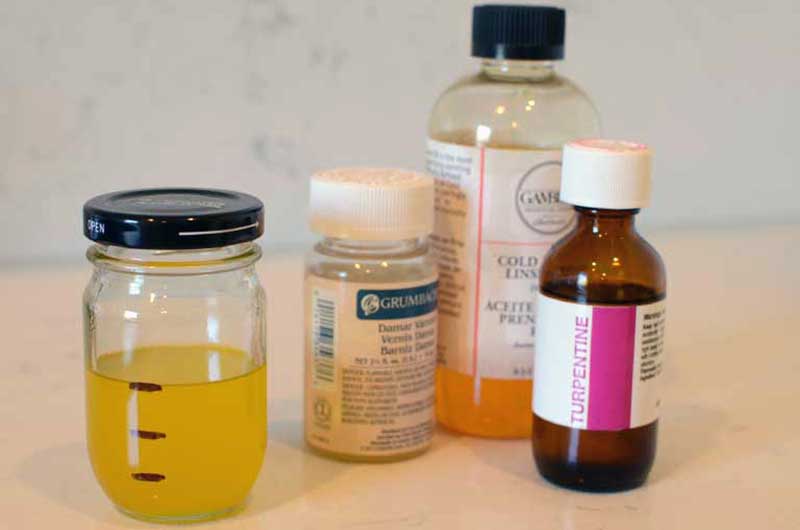
What Exactly Is an Oil Painting Medium?
Why are there so many types of painting mediums? There are many types of painting mediums because each one affects the paint in different ways. Fast-drying mediums speed up the drying process, while slow-drying mediums provide more time to manipulate the paint. Some mediums help preserve the sheen after the paint dries, with some including varnish and others not. Additionally, some mediums allow the paint to hold brushstrokes, while others are leveling, making brushstrokes nearly invisible to the eye.
Why Art Schools Push Mediums (And Why It Could Be About Cheap Paint)
In my opinion, the issue arises because students often buy cheap paint. Painting with medium is a common practice, and many artists are unaware that it's possible to paint without it. Oil paints come in both student-grade and artist-grade varieties. Student-grade paints are less expensive but tend to be of lower quality. They typically have a thicker consistency, likely due to the additives used to reduce costs. This thicker paint requires thinning before it can be easily manipulated with a paintbrush. The initial layer of paint is usually thinned with a solvent such as mineral spirits or turpentine, while the upper layers of an oil painting are typically thinned with an oil or a painting medium. Using a painting medium to thin the paint improves its flow.
DIY Oil Painting Medium Recipe (1:1:1 Ratio)
Gather Ingredients: You’ll need linseed oil, turpentine, and damar varnish (available at art supply stores). Measure Equal Parts: In a small glass jar, mark 3 equal sections with a marker. Fill to the first line with linseed oil, the second with turpentine, and the third with damar varnish. Mix Safely: Secure a tight-fitting, child-proof lid and gently shake to combine. Label the jar “Oil Painting Medium” and store out of children’s reach. Apply Sparingly: Mix a few drops into your oil paint or dip your brush into the medium before painting to thin paint and improve flow.
Video Demonstration: See It in Action
The Downside: Solvents, Fumes, and Unnecessary Complexity
Many oil paint mediums contain a solvent. Solvents evaporate faster than oil, so these paint mediums can accelerate the paint drying time. This can be a plus for some artists. However, solvents are often toxic and can produce fumes that accumulate in your studio, home, or workspace. This is especially concerning if there are children present. You can reduce the toxic effects of oil painting by learning to paint without solvent-based mediums.
The Simple Alternative: Paint with Pure Linseed Oil (or Walnut Oil)
Luckily, it's easy to paint without an oil paint medium. You can easily substitute your painting medium with linseed oil. Look for pure refined linseed oil at any art supply store. If refined linseed oil is unavailable, walnut oil is a good alternative. Various oils can work, each with its unique properties, but linseed oil is the oldest and most trusted option.
What Happens When You Skip Mediums? (Real-World Results)
When using linseed oil as a substitute for traditional painting mediums, there are a couple of important things to keep in mind.
Some paint mediums contain varnish, which helps preserve the sheen of a painting. When using linseed oil, certain paint colors may dry to a matte finish. You might notice that some areas become dull as they dry, making the colors appear muted. I’ve experienced this with Raw Umber and Burnt Umber oil paints. This phenomenon is known as “sinking in.” It occurs when the top layer of oil is absorbed by the underlying paint layers, which can happen especially with earth pigments. The result is that certain spots on the painting become dull and matte once dry.
To remedy this, you can use a simple process called “oiling out.” This technique restores the colors to their original sheen and richness, allowing you to see how the painting will look once it is varnished. To prepare a dry oil painting for additional layers, apply a very thin layer of linseed oil over the surface. This enhances the sheen and deepens the colors, allowing you to accurately see the colors and continue painting. Finally, applying a coat of varnish to the finished oil painting will permanently restore its sheen.
The second point to consider is that oil may accumulate on the surface of your painting over time, potentially leading to issues with paint adherence. The buildup of excess oil causes paint to bead and crawl, preventing the new paint from adhering to the dry layer. However, this minor defect can be easily resolved. Simply brush a thin layer of turpentine over the dry oil painting and allow it to evaporate. This will help the next layer of paint adhere properly, preventing resistance. Minor sanding can also fix this issue, but it is more likely to disturb or damage your previous paint layers.
The Chemistry & Health Science of Skipping Oil Painting Mediums
Oil paint mediums often contain solvents, such as turpentine and mineral spirits, that evaporate quickly. This accelerates surface drying through the loss of volatile components; however, it also poses health risks. Inhaling volatile organic compounds (VOCs) can irritate the lungs, eyes, and skin, and chronic exposure has been linked to headaches and dizziness, among other things. This is particularly concerning if you are painting at home while children are present.
Artist-grade paints have a higher pigment load and optimized binder ratios, resulting in a creamy consistency without the excessive fillers that can stiffen student-grade paints. As a result, artist-grade paints require less thinning for proper flow. Pure refined linseed oil (or walnut oil) offers similar lubrication due to its fatty acid content, without introducing VOCs or significantly altering the drying process.
Matte drying occurs when excess oil migrates unevenly or when surface oxidation varies. "Oiling out" with a thin layer of linseed oil can temporarily restore a uniform refractive index and gloss. Additionally, applying a final varnish, such as Gamvar, creates a more permanent protective layer with a consistent sheen.
Paint resistance, also known as crawling or beading, can result from oil buildup, which reduces surface energy. Wiping the dry painting surface with a solvent like turpentine temporarily cleans and etches the surface, restoring adhesion for the next layer of paint without compromising the film's integrity.
Conclusion: Safer, Simpler Painting with Linseed Oil Alone
The best type of oil paint medium may be no oil paint medium. Fact-check everything that you learned in Art School. Simply paint with linseed oil and paint for a safer painting experience. Of course, I'm an artist, not a scientist. This is my opinion, based on my experiences and research. So please, take from this what you want, and leave the rest.
Related Topics: