Oil Painting for Beginners: The Right Supplies to Start Strong
The Right Paintbrushes, Surfaces, & More
Focus on Quality Essentials and Build from There
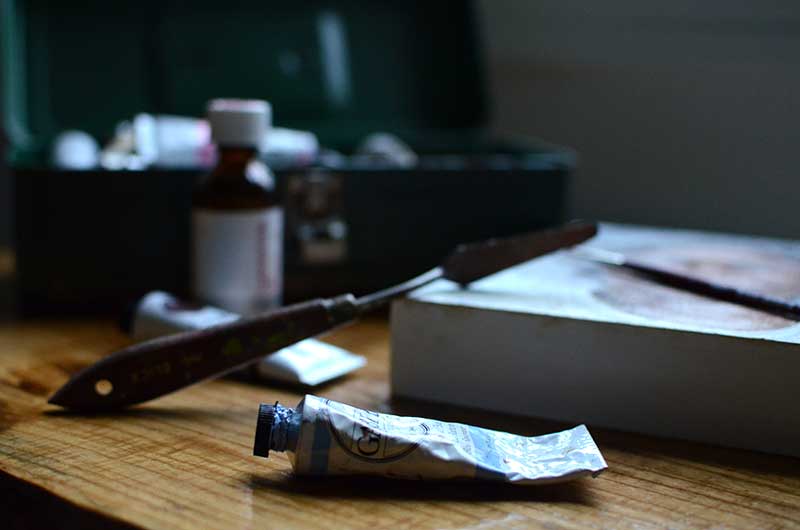
- The Right Type of Oil Paint
- The Right Surface To Paint On
- The Right Paintbrushes
- The Right Type of Oil
- Basic Studio Supplies
The Right Type of Oil Paint: Why Artist-Grade Beats Student-Grade Every Time
To begin oil painting, it's important to select the right type of oil paint and the appropriate colors. So, what is the right type of oil paint? Oil paints come in two main grades: student-grade and artist-grade. Student-grade paints are more affordable, and many artists start with them. Don't do that. Here's why.
I started out painting with student-grade paints. I was also taught to paint with paint medium. It's a long story, but student-grade paint often feels stiffer. This stiffness is likely due to the fillers added to the paint to reduce costs.
Oil paint can be thinned using oil or a paint medium, which is a blend of oil, solvents, and other components. Thinning the paint makes it easier to apply and manipulate. Thicker, stiffer paint will require more oil or paint medium to achieve the desired consistency.
Artist-grade paint is creamier and easier to manipulate directly from the tube. It requires very little additional oil to be usable.
Using artist-grade paint minimizes the amount of additional oil needed while painting. This also decreases the necessity for paint mediums, thereby reducing exposure to toxic solvents and fumes.
Painting with artist-grade paint from the get-go simplifies the painting process. Need to save money when buying paint? Buy fewer paint colors.
Selecting a Limited, Effective Color Palette
The colors you enjoy using for painting will likely evolve over time. Begin with a limited palette. Having fewer colors means fewer decisions, which is beneficial during the learning process.
The Right Surface: Pre-Primed Canvas, Panels, or Arches Oil Paper
The easiest painting surfaces are pre-primed by the manufacturer. Oil painting surfaces need to be prepared before painting. A pre-primed canvas or painting panel, or an oil paper such as Arches Oil Paper, is a convenient option.
The Right Paintbrushes: Natural Bristles, Flats & Rounds, and Smart Usage
Paintbrushes are often a matter of personal preference. Typically, oil paintbrushes are made from sable or hog hair, so it's best to buy natural bristles when possible.
I was taught to paint with five different brushes, one for each color. We were expected to hold all five in one hand, which I found rather ridiculous. This method was meant to prevent the colors from contaminating each other and turning muddy.
However, I eventually learned to simply clean my brush between colors by dipping it in oil and wiping it on a clean cloth. I recommend starting with a few brushes of various sizes, choosing the best quality you can afford. I prefer flat brushes and round brushes.
Occasionally, I can complete an entire painting using just one brush if I'm working on a smaller piece.
For the underpainting, I suggest starting with a lower-quality brush. The underpainting, or first layer, is often created with oil paint that has been thinned with turpentine or mineral spirits, which can be hard on the bristles. Higher-quality brushes can be used for the upper layers, where the paint is thinned with oil only.
The Right Oil: Refined Linseed Oil Is All You Need
To start oil painting, you only need one type of oil: refined linseed oil, which is derived from flax seeds. You can choose between traditional linseed oil and refined linseed oil; both will work well, but refined linseed oil is less likely to yellow over time.
Other oils that can also be used to thin oil paints include walnut oil, poppyseed oil, safflower oil, and spike lavender oil. However, linseed oil is all you truly need.
Many schools teach painting with paint medium. Mediums contain solvents and other compounds and you don't need them. Paint medium is optional.
Basic Studio Supplies: Easel, Palette, Knife, Solvent, Soap & Safe Rag Handling
In addition to the essentials listed above, a few basic studio supplies are good to have on hand. I recommend the following:
- Easel
- Paint Palette
- Palette Knife
- Lid To Hold Oil
- Solvent
- Soap
- Paint Rags
Basic Studio Supplies: Easel, Palette, Knife, Solvent, Soap & Safe Rag Handling
Using an easel is convenient but not essential. Use an easel if you have one available.
Palette & Mixing Options: DIY with Freezer Paper, Glass, or Foil
Paint is mixed on a paint palette. It's simply a surface that you mix your paint on. There are many styles available. Here are some easy options that you may have on hand: A piece of glass, the shiny side of a piece of freezer paper, a piece of wood sealed with a thin layer of polyurethane, or aluminum foil.
Palette Knife
Palette knives are used for mixing paint and come in different sizes and shapes. Usually, one knife will suffice. Choose the size and shape that you like.
Lid To Hold Oil
I use an empty jar lid to hold a small amount of linseed oil for painting. Just place the lid on your palette and fill it with a small quantity of oil.
Solvent Use: Keep It Minimal for the First Layer
Oil paint can be thinned using either a solvent or oil. Typically, the first layer of an oil painting is thinned to a drawing consistency using a solvent. Common solvents include turpentine and odorless mineral spirits. When thinning oil paint on your palette, use only a drop or two. Aim for a consistency that allows you to draw with the paintbrush easily.
Soap
Paintbrushes can be cleaned with solvent or soap. Solvents are hard on paintbrush bristles. If possible, gently wipe excess paint from the paintbrush with a rag. Then clean the paintbrush with oil, removing as much paint as possible. Finally, wash the paintbrush with a gentle soap. I like to use Murphy's Oil Soap.
Paint Rags
Paint rags and shop-style paper towels are useful for cleaning brushes and wiping away excess paint. However, it's crucial to dispose of them safely. Rags that are soaked with linseed oil can be combustible and may spontaneously catch fire. I dispose of paint rags in an outdoor fire pit rather than putting them in a trash can. Be sure to do your research and always store and dispose of used paint rags safely.
The Chemistry & Practical Science Behind These Oil Painting Choices
Selecting artist-grade paints, refined linseed oil, and natural-bristle brushes is supported by polymer chemistry and material performance. Artist-grade oils feature higher pigment volume concentration with fewer fillers, yielding a creamy flow that reduces the need for thinners, limiting solvent exposure and preserving film integrity. Student-grade paints, loaded with extenders, increase stiffness and demand more medium. Refined linseed oil is refined to remove impurities, minimizing free fatty acids that cause yellowing. Natural sable and hog bristles retain and release paint uniformly, optimizing flow and preventing streaking, while synthetic brushes often lack this micro-texture. Pre-primed surfaces balance absorbency and tooth. Gesso provides stable sizing without excessive oil sinking, reducing cracking risk. Solvent use in thin underpainting offers fast-drying initial layers, but minimizing solvents preserve long-term elasticity. Safe rag disposal addresses linseed oil's combustion risk if bunched up, a real risk mitigated by spreading, air-drying, or water-soaking before disposal. These choices optimize workability, reduce toxins, and enhance archival stability for lasting realism.
Conclusion: Focus on Quality Essentials and Build from There
To start oil painting, you'll need a few basic supplies: a few tubes of artist-grade oil paint, a pre-primed canvas or painting panel, a couple of quality paintbrushes, linseed oil, and some miscellaneous studio supplies. The essential items are the paint, a prepared surface, a paintbrush, and linseed oil. The rest of the supplies can likely be found around your home or studio. Best wishes to you, and I'm rooting for you!
Related Topics:
Essential Brushes For Oil Painting
Best Oil Paints For Beginners
Oil Painting How To