Choosing the Right Oil Paints: Artist-Grade, Colors, Opacity, Black Alternatives & White Recommendations
Artist-Grade vs Student-Grade Oil Paint: Why Start with the Best
How Many Colors Do You Really Need? Start with a Limited Palette
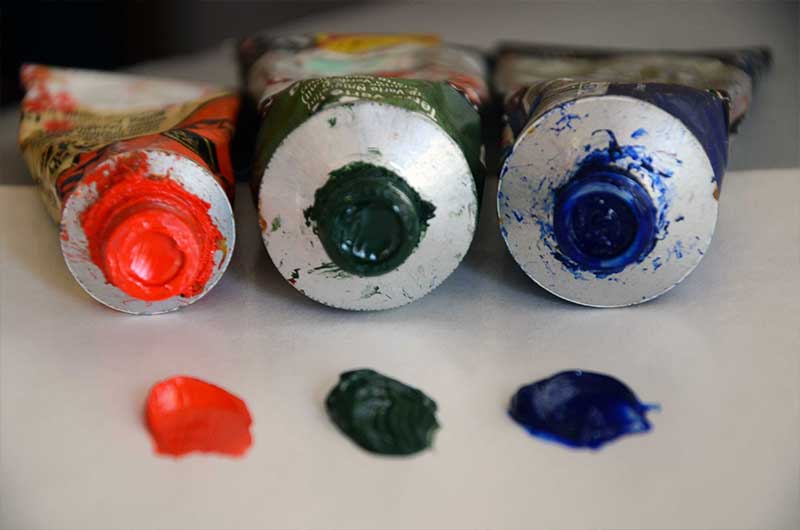
- Student-Grade or Artist-Grade Paint
- How Many Paint Colors Do I Need
- Opaque or Transparent Paint
- Do I Need Black Paint?
- What Color of White Should I Use?
Artist-Grade vs Student-Grade Oil Paint: Why Start with the Best
Oil paints are available in two main categories: student-grade and artist-grade. I recommend starting with artist-grade oil paint for several reasons. Many students and beginners choose student-grade paints to save money, and I did the same when I first started. However, I eventually switched to artist-grade paints and realized that I lost valuable painting time by having to relearn techniques.
When I say "relearn techniques," I mean that student-grade paints require a lot of paint medium to achieve a workable consistency. In contrast, artist-grade paints are creamier and can be used almost straight from the tube. Changing paint types disrupted my painting habits. I had to slow down and relearn how to paint with little to no paint medium. Ultimately I gave up the use of paint medium altogether.
Artist-grade paints require less oil or paint medium. To save money, consider buying fewer colors of artist-grade paint rather than relying on student-grade options. It’s worth the investment to start with artist-grade paint from the beginning and avoid the challenges of transitioning later.
How Many Colors Do You Really Need? Start with a Limited Palette
More paint colors means more decisions. A beautiful painting can be created with just a few paint colors. A monochromatic painting can be created with one or two. I recommend starting out with a limited paint palette.
I Recommend These Beginner Oil Paint Colors
- Cadmium Red
- Permanent Rose
- Naples Yellow
- Raw Sienna or Yellow Ochre
- Cadmium Orange
- Terre Verte or Green Earth
- Ultramarine Blue
- Violet or Purple
- Flake White Replacement
- Iron Oxide or Van Dyke Brown
Choosing paint colors is a matter of personal preference.
Understanding Opacity and Lightfastness Ratings
When choosing oil paints, it's important to check the paint tube for information on opacity and lightfastness ratings. Transparent oil paints allow light to pass through, while opaque oil paints do not. Mixing an opaque color with a transparent one can create more luminosity than mixing two opaque colors. Make sure to do your research and experiment with different levels of opacity.
The lightfastness rating indicates how resistant a color is to fading over time. For instance, Alizarin Crimson is known as a fugitive color, meaning it is prone to fading. I once knew an artist who often used Alizarin Crimson to create pinks in his butterfly paintings. Unfortunately, those pinks faded and disappeared over the years, and they are now completely gone, as if they were never painted.
ASTM lightfastness standards provide ratings for individual paint pigments. Be sure to look for the lightfastness rating on each paint tube and try to avoid colors with a poor rating.
Do You Need Black Paint? Better Ways to Mix Rich Darks
I don't paint with black oil paint. Many people do. It ultimately comes down to personal preference. Instead of using black, I recommend mixing Ultramarine Blue with a dark brown, such as Van Dyke Brown, Iron Oxide, or Asphaltum. This combination creates a richer dark tone that has a more traditional appearance.
What White Should You Use? Titanium, Zinc, Flake & Safe Alternatives
There are several colors of white oil paint available. How do you pick the right one? Titanium White is typically a safe choice. It can be used for almost anything. Zinc White is prone to cracking so I don't recommend it. Flake White is toxic but traditionally used for portraits. Consider using an oil paint color called Flake White Replacement. It's a safer version meant to replace traditional Flake White.
The Pigment Chemistry and Material Science Behind These Oil Paint Choices
Oil paint performance hinges on pigment chemistry, binder ratios, and light interaction. Artist-grade paints maintain higher pigment volume concentration with fewer fillers, resulting in superior tinting strength and reduced need for thinners. Less medium means fewer volatile solvents and likely better adhesion during fat-over-lean layering. Limited palettes can be helpful in training perceptual color relationships without palette overload. Opacity and transparency affects light scattering—transparent pigments and permit underlayers to glow through, while opaques block light for solid coverage. Combining them creates luminosity via subsurface scattering. The light penetrates the surface of the painting and scatters within it. This may enhance the illusion of painted skin or fabric. Lightfastness depends on molecular stability or the ability of the pigments to maintain their structure and color over time. Fugitive pigments like Alizarin Crimson tend to fade over time. Avoiding tube black prevents dead-looking grays. Mixing Ultramarine with browns (iron oxides) can yield a dark color rich in undertones. Titanium White provides opacity and excellent lightfastness. Zinc White is semi-transparent and prone to cracking and becoming brittle. Gamblin Colors states on their website that zinc makes for a brittle paint film. There are other whites that are more stable than Zinc White. Gamblin also advocates the use of rigid supports for all paintings, as all paint films become less flexible over time. Flake White Replacement mimics traditional lead white without the toxicity of lead white. Starting with quality materials aligns with archival science. Higher pigment purity and stable binders form durable films resistant to yellowing, cracking, and fading, ensuring realistic works endure for generations.
Conclusion: Invest in Quality and Simplicity for Faster Progress
I believe that the best oil paints for beginners are the same ones that a master painter would use. It’s important to start with the best materials you can afford, so I recommend using artist-grade paints. Additionally, working with a limited color palette can be very beneficial; fewer colors reduce the number of decisions you need to make and allow you to focus on how to manipulate the paint. Best wishes to you, and I’m cheering you on!
Source & Recommended Reading:
https://gamblincolors.com/zincoxideinartistoilcolors/Related Topics:
Essential Brushes For Oil Painting
Materials To Start Oil Painting