Mixing Realistic Skin Tones in Oil Paint: Color Palettes, Temperature Rules, and Adjustment Techniques
Looking For Essential Colors for Mixing Skin Tones? Start with These Basics
Example Skin Tone Mixes: Earthy, Venetian, and Reclaimed Combinations
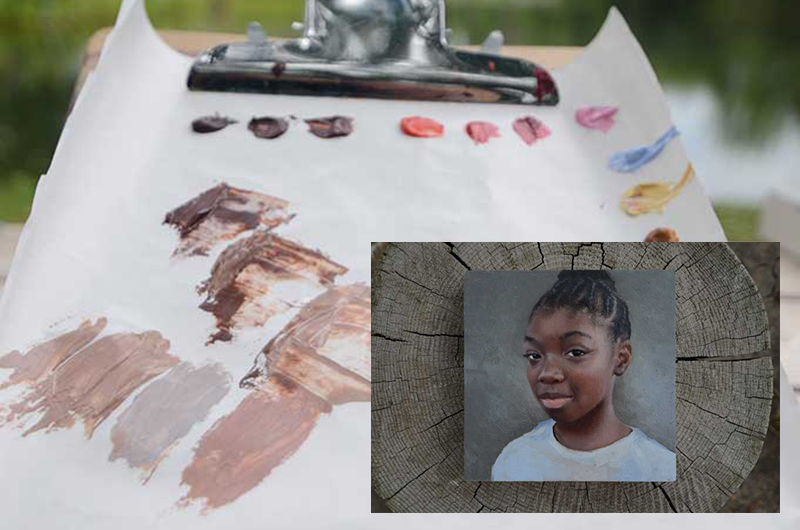
When it comes to mixing oil paint for skin tones, there isn't a single recipe. There are many techniques to achieve realistic skin tones in oil paints. I’ve broken down my learning process and shared my observations on mixing oil paint for lifelike skin tones. The method involves blending warm and cool colors in various shades. Just follow these simple steps for mixing oil paint to create skin tones.
To paint skin tones in oil, you'll need to mix different colors. Create a variety of warm and cool shades, ranging from dark to light.
How To Mix A Skin Tone Oil Paint
- Start by mixing a skin tone base color
- Separate this base color into 2 parts
- Add white to one pile to create a mid-tone
- Separate the mid-tone into 2 parts
- Add more white to yield a lighter shade
- Separate again into smaller sections
- Add yellow to create warmer flesh tones
- Add blue or purple to create cooler flesh tones
- Add red or pink to create rosy pink tones
Start By Mixing A Good Skin Tone Base Color
The base color will vary depending on the model and the light source.
I prefer to start with a neutral base color. I reserve the most saturated colors for the areas that are fully lit and for the spots that turn pink when a person gets cold or blushes.
When painting a portrait, I like to begin with a mix of Iron Violet and Rust Red, which creates a dark base color.
Separate the Base Color into Two Parts
Divide the dark base color into equal parts. Keep one pile dark for the shadows.
Add White To Create Mid-Tones
Combine white paint, such as Flake White Replacement, into one pile to create a medium-toned skin color that closely matches the mid-tones seen in the subject.
Separate The Mid-Tone Into 2 Parts
Let's take this medium-toned oil paint mixture and divide it into equal portions.
Lighten To Create Lightest Shades & Highlights
Incorporate more white into one section to enhance it, and use colors to create highlights and lighting effects.
Further Divide Paint Into Small Sections
Additionally, divide the paint stack into smaller sections to create warm and cool tones.
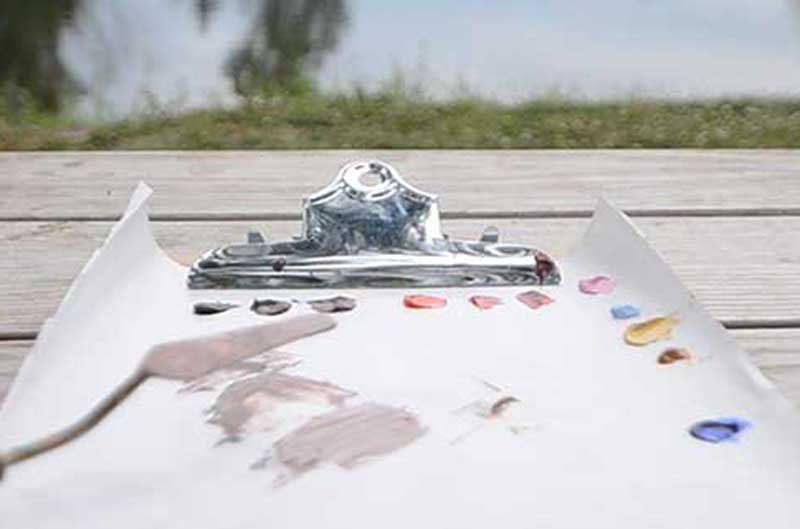
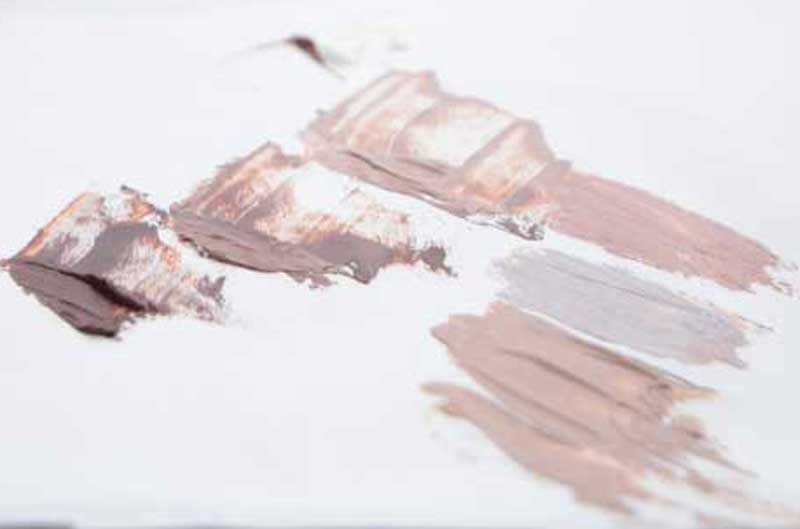
Adjust The Color Temperature
To create different skin tones with oil paint, add a small amount of yellow for a warmer tone, blue for a cooler tone, and pink for a rosier flesh color.
A straightforward approach to mixing skin tone involves using colors like Yellow Ochre or Naples Yellow to warm the highlights. For cooling the mixture, consider adding Radiant Blue or French Ultramarine Blue.
Painting Skin Tones In Oil Paint
Use the darkest base color for the shadows, and the lighter shades for mid-tones and highlights. Adding touches of warm and cool paint colors will subtly adjust the flesh tone as you paint.
Mixing Oil Paint Skin Tones:
There are various ways to achieve realistic skin tones in oil paint. Here are my three favorite color combinations.
Mixing Skin Tones: Start with The Basics
Here are some examples of skin tone mixes: Reclaimed Earth Colors, Venetian tones, and Blushy combinations.
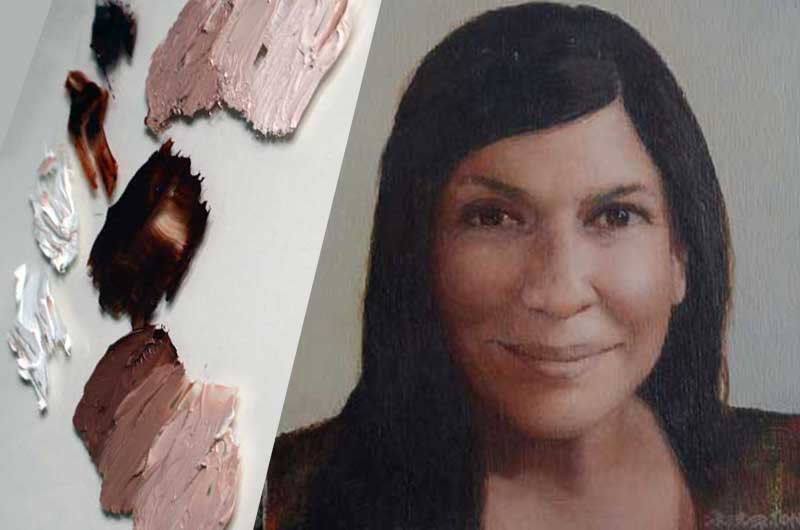
- Gamblin's Iron Violet
- Gamblin's Rust Red
- Flake White Replacement
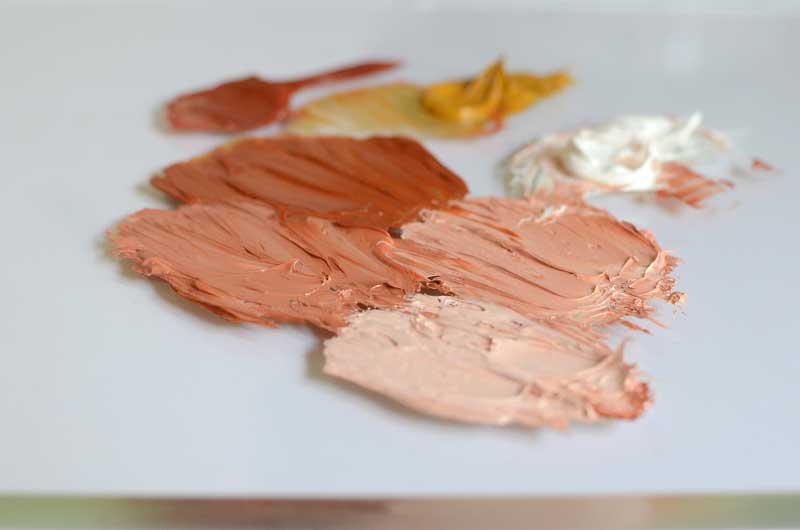
- Venetian Red
- Yellow Ochre
- Flake White Replacement
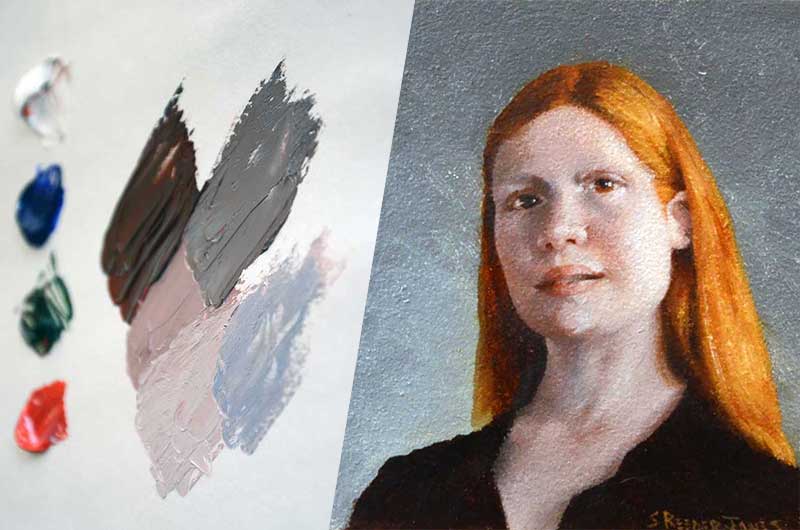
- Cadmium Red Light
- Terra Verde
- French Ultramarine Blue
- Flake White Replacement
Add small touches of yellow, blue, pink, and red as needed to adjust the color temperature.
Mix paint colors that are similar to the model's skin tones. You can warm or cool the flesh color by incorporating small amounts of other colors.
Additional paint colors you might consider include Naples Yellow, Cadmium Red, Permanent Rose, French Ultramarine Blue, Gamblin Radiant Blue, and Gamblin Radiant Pink.
In my observations, I believe that skin tones in oil painting are primarily composed of reds, yellows, browns, blues, greens, and purples.
Paint What You See: Observe Real Undertones and Variations
To learn how to paint different skin tones, you must observe what you see. It’s important to select various paint colors for individuals with fair skin compared to those with darker skin.
Understanding Color Temperature in Skin Tones: Warm Light vs Cool Light
To create a realistic skin tone in your paintings, it's essential to understand color temperature. Each person has unique undertones in their skin, which is why cosmetics are available in a diverse range of shades, incorporating both warm and cool tones.
When painting, consider the color temperature of your light source. If your model is illuminated by warm light, you'll need to use a warmer paint mixture. In contrast, if the lighting is cool, you may need to incorporate some blue tones into your palette.
The Warm-Light or Cool-Shadow Rule (and When to Break It)
Here's a rule that's helpful when painting skin tones.
If the light hitting your model is warm or yellow, the shadow colors should be cool in color, containing blues or purples. On the other hand, if the light is cool or bluer, the shadows will likely appear warm in color.
I'm sure there are exceptions to this rule, but it's a good guideline to follow when choosing paint colors for mixing skin tones.
Adjust Colors Frequently: Subtle Shifts Every Half Inch for 3D Form
Skin tones exhibit a wide range of color variations. Be ready to frequently adjust the paint color as you work across the form. This involves adding small amounts of different colors to your paint mix.
These subtle color changes should ideally occur every half inch. Areas that are painted with a single solid color can appear flat. By incorporating subtle shifts in color, you can create a more three-dimensional look for the object.
The Perceptual and Optical Science of Realistic Skin Tones
Realistic skin tone mixing in oil exploits human visual perception of subsurface scattering and color constancy. Skin is a translucent, multi-layered material—light penetrates the epidermis, scatters in the dermis, and reflects back with selective absorption by hemoglobin (reds and pinks), melanin (browns and yellows), and carotenoids (oranges), creating complex, desaturated hues with subtle warm-cool shifts. The eye detects these via opponent-process channels (red-green, blue-yellow, black-white), making pure tube colors appear unnatural; neutralizing with complements (e.g., blue in shadows under warm light) mimics real spectral reflectance and maintains perceptual balance. The warm-light and cool-shadow rule aligns with simultaneous color contrast and chromatic adaptation—under warm illumination, the visual system discounts yellow bias, so shadows appear relatively cooler (higher blue content) to preserve object color constancy. Frequent micro-adjustments (every half inch or so) replicate natural micro-variations in blood flow, melanin distribution, and scattering angles, preventing flatness by preserving edge gradients that the early visual cortex (V1) uses for form perception. Limiting mixes to 3 colors reduces chromatic noise and muddiness. Excess pigments scatter light incoherently, dulling chroma—while strategic white, yellow, blue lightening exploits value and temperature perception to model volume without losing saturation. Observing "what you see" bypasses symbolic top-down biases (e.g., "skin is peach") in favor of bottom-up retinal matching, a hallmark of perceptual expertise in realism painting. These techniques train the artist to reproduce the optical physics of human skin for convincing, lifelike results.
Conclusion: Experiment, Observe, and Build Your Own Skin Tone Recipes
In conclusion, there are many different methods and color combinations for mixing flesh-tone oil paint.
It's important to understand color temperature and value in creating realistic skin tones. I suggest laying out the paint colors that you currently have. You likely have a suitable combination.
Tips to Avoid Muddy Mixes: Limit to 3 Colors, Use White Wisely
Experiment by mixing different color combinations. To avoid muddying the color, limit your mixes to a maximum of three paint colors at a time.
Use photo references as you experiment to help achieve the desired skin tone.
Lighten with Care: White, Yellow, or Blue for Mid-Tones and Temperature
Once you've created a base color that closely matches your model's skin tone, add white to create a mid-tone. For a warmer hue, lighten the base color with a light yellow instead of white, and for a cooler hue, use a light blue.
Adding a touch of Cadmium Red will create a warm pink skin tone, while a small amount of Permanent Rose will transform the base color into a cool pink tone.
Realistic skin tones consist of a variety of warm and cool hues that change subtly as light interacts with the face or figure.
There is no single recipe for skin tone oil paint. Just like painting anything else, it's best to paint what you see. I've outlined 3 of my favorite color combinations hoping that you will find these basics for painting skin tones helpful.
Related Topics: