How To Make Skin Tone With Paint
How to Make Skin Tone with Paint: Mix Realistic Flesh Tones in Oil (or Any Medium)
How to Mix Realistic Skin Tones with Paint: Step-by-Step Guide to Flesh Color, Base Mixes & Adjustments
Wondering how to make skin color with paint? Or how to mix skin tone paint for lifelike portraits? Whether you're asking what colors make skin color, how to make skin tones with paint, or how to paint skin tones, the key is starting with a neutral base and adjusting for value, temperature, and subtlety. Skin isn't a single "peach" shade—real human skin shows subtle warm-cool shifts, desaturated hues, and translucent depth from light scattering through layers of epidermis, dermis, hemoglobin (pinks/reds), melanin (yellow-browns), and collagen.
This guide focuses on oil painting (perfect for oil painting portrait work), but the principles apply to acrylic, watercolor, or other paints. How to make skin color paint starts simple: mix a base, then create tints, shades, and adjustments. Experiment to match any skin tone—from light to dark, warm to cool.
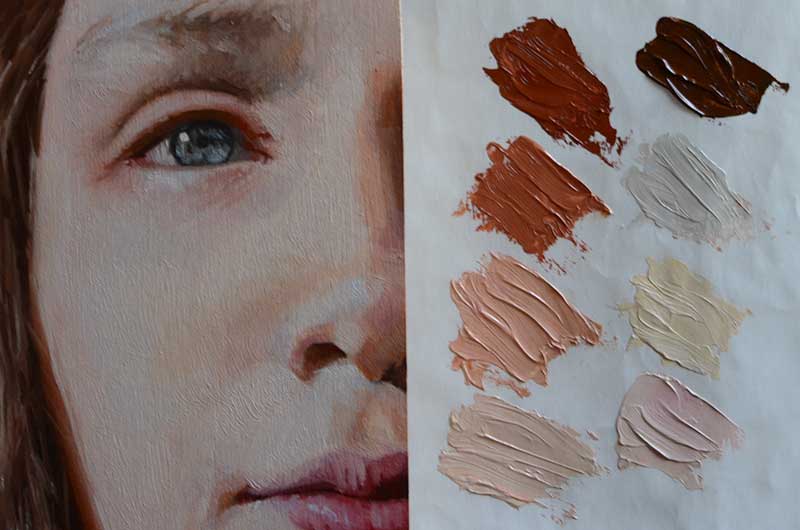
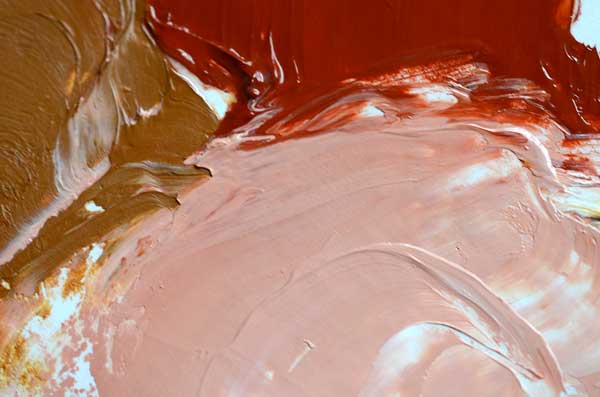
- Start by mixing a skin tone base color.
- Create tints of the base color by adding white.
- Adjust the color temperature by adding small amounts of blue or yellow.
- Create warm or cool pinks by adding a touch of red paint.
- Tone down bright-colored paint by adding a complementary color.
- To make shadow skin color paint, darken the base color.
Regardless of the specific paint colors used, these steps can help you create a consistent skin tone across your painting.
Mix a Neutral Skin Tone Base Color (How to Make Skin Color / Flesh Color Paint)
To answer how to make skin color, how to mix skin color, or which colour mix to make skin colour, begin with earth tones for a realistic, desaturated base rather than bright primaries alone (though primaries work too—more on that below).
A reliable combination for a neutral flesh color base:
- Venetian Red (or Cadmium Red Light / Permanent Rose for warmer pinks)
- Raw Sienna (or Burnt Sienna / Yellow Ochre for yellow-brown undertones)
- Optional: Small touch of Terra Verte (or Ultramarine Blue) to neutralize orange brightness
Mixing skin tone base color: Combine Venetian Red and Raw Sienna in roughly equal parts (adjust ratios for warmth—more red for rosy undertones, more sienna for golden/yellow). This creates a muted orange-brown flesh tone that mimics average skin reflectance.
For a primary colors approach (great for how to make skin color with primary colors): Mix red + yellow (e.g., Cadmium Red + Yellow Ochre) to make orange, then add blue (Ultramarine) sparingly to neutralize and brown it out. Add white last to lighten.
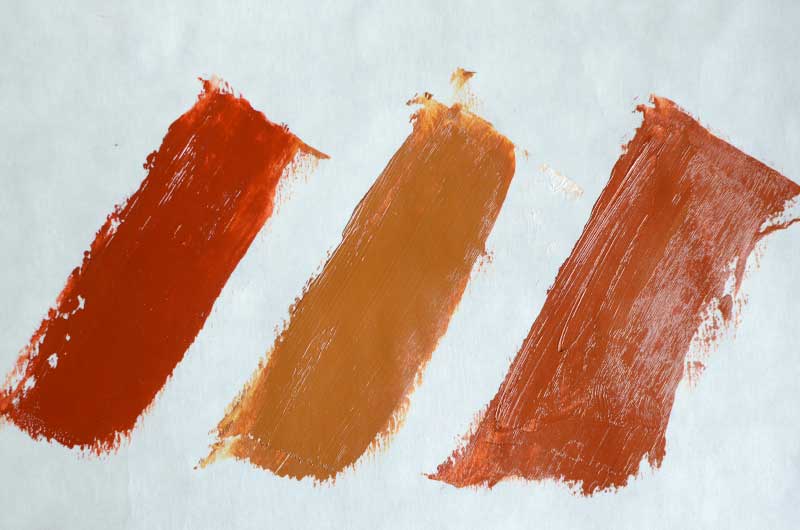
Mix Venetian Red and Raw Sienna to make a flesh tone base color.
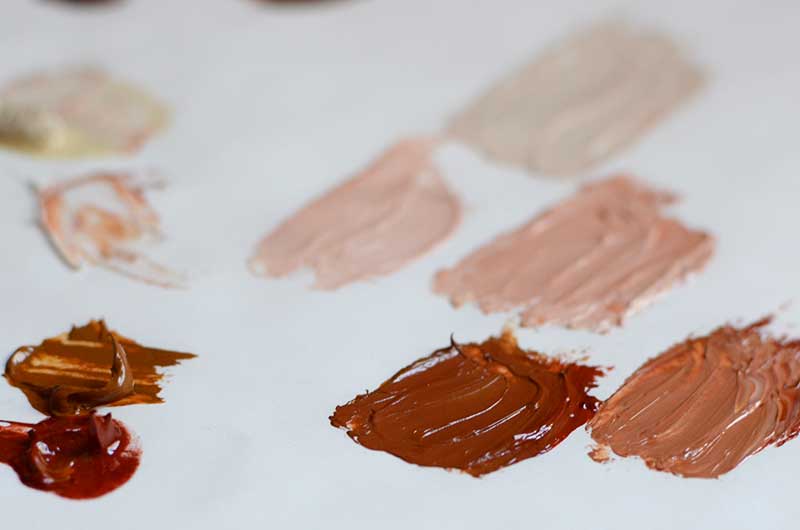
Create Tints by Adding White (Lighten for Mid-Tones & Highlights) — How to Make Skin Tone Paint / Light Skin Color
How to make skin tone color paint or how to make a skin tone with paint? Divide your base into piles and gradually add white (Flake White Replacement or Unbleached Titanium) to create a range of lighter tints.
- Add small amounts of white for mid-tones.
- Add more for highlights on forehead, nose, cheeks.
- Pre-mix 3–4 tints (e.g., base + 10% white, base + 30% white, base + 50%+ white) to keep skin tone consistent across the face.
This addresses how to make light skin color paint, how to make white skin color with paint, or how to make pale skin color with paint—just use more white and cooler adjustments.
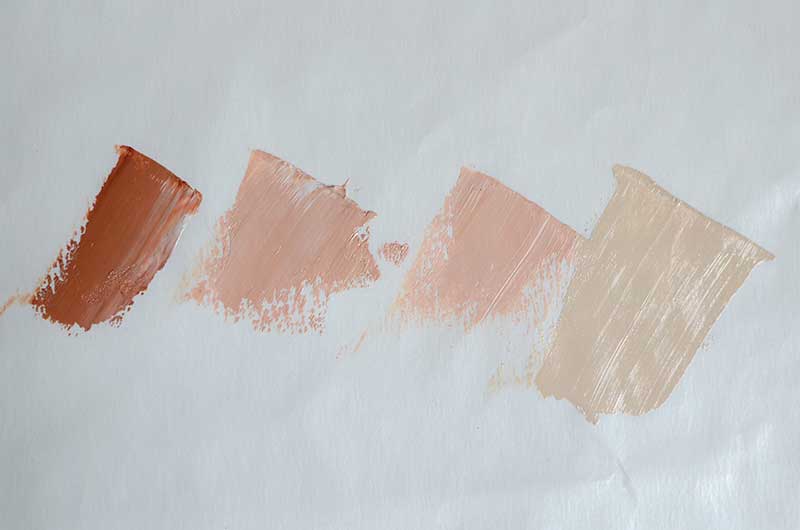
Add white paint to create various tints.
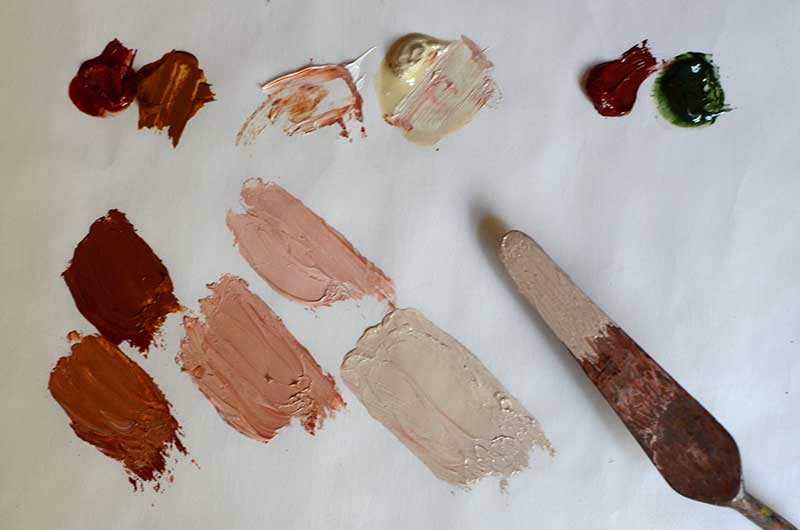
Mix a range of flesh color tints.
Adjust Color Temperature (Warm with Yellow, Cool with Blue) — Mixing Skin Tones
Skin shifts warm in light, cool in shadows. To handle color mixing skin tones or how to mix skin tones:
- Add Naples Yellow (or Cadmium Yellow) for warmer flesh tones (lit areas).
- Add Ultramarine Blue or Radiant Blue for cooler tones (shadows, veins).
Small amounts prevent overpowering—how to mix a skin tone often means tiny tweaks for natural variation.
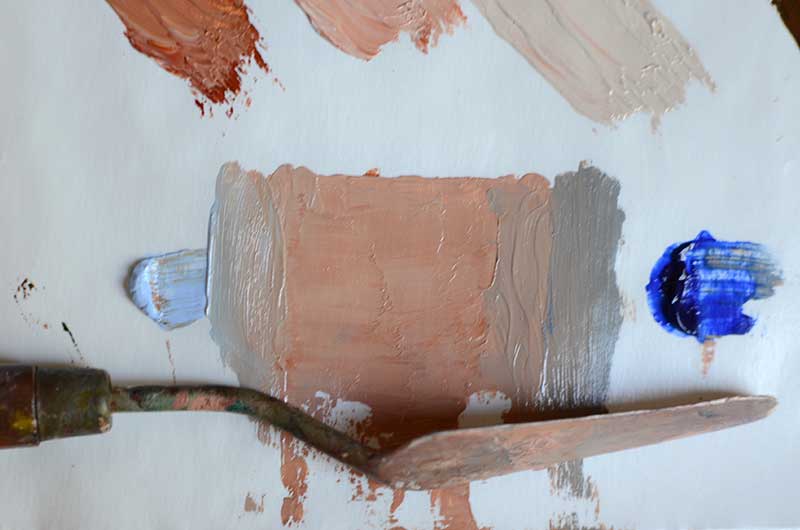
Add Radiant Blue or Ultramarine Blue for cool flesh tones.
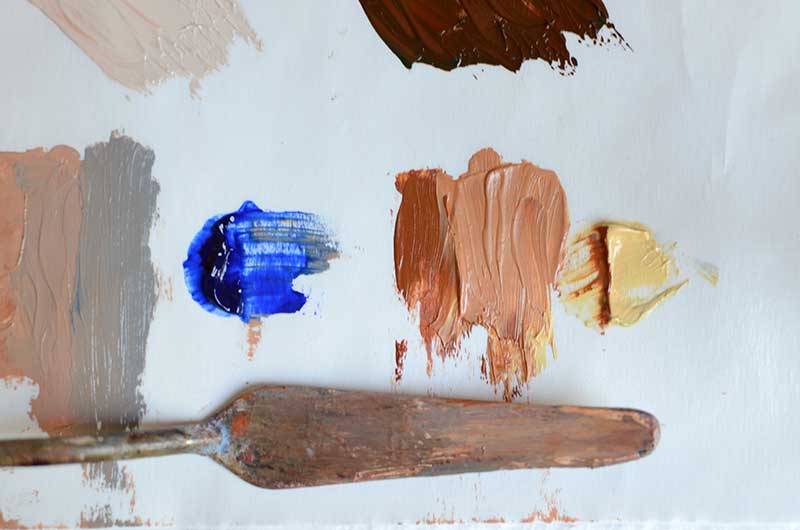
Add Naples Yellow to create warm flesh tones.
- Ultramarine Blue
- Radiant Blue
- Naples Yellow
Add Pinks for Blush, Cheeks, Lips & Nose
For rosy areas, add a touch of red:
- Permanent Rose for cool pinks.
- Cadmium Red for warm pinks.
How to make skin colour by mixing two colours? Base + tiny red often suffices for cheeks/lips. Reds have high tinting strength—add sparingly!
Why pink accents go on the nose, cheeks, ears, and fingers
The common artistic guideline suggests adding pink to the nose, cheeks, ears, and fingers—areas that tend to get cold the fastest—because this aligns with human anatomy. These regions have a rich blood supply, and skin flushing or blushing occurs due to an increase in blood flow to the cheeks, resulting in a natural rosy glow. Because these parts of the body are extremities, protruding, and often exposed, they can undergo rapid temperature changes. In cold conditions, blood flow can increase (a process known as vasodilation) to help preserve warmth, causing the skin to flush. When blood vessels in the face expand, increased blood flow may cause a pinkish hue in the skin.
In realistic portrait and figure painting, artists often use subtle applications of colors like Permanent Rose, Cadmium Red, or Alizarin Crimson on these areas to capture that blush. This technique prevents the skin from appearing flat or overly uniform when only using yellows and browns in the base mix.
Tone Down Bright or Orange Colors with Complements
Natural skin is subtle, not vivid. If your mix looks too orange/bright (skin tone paint mix gone wrong), add its complement:
- Blue (Ultramarine) to neutralize orange → more realistic skin color paint.
This is key for mixing skin color or color mix for skin tone without muddiness.
Mix Shadow Skin Tones (Darken for Depth) — How to Make Shadow Skin Color Paint
Darken your base for shadows:
- Add Terra Verte (cool green-gray) for subtle depth.
- Add Ultramarine Blue for deeper, venous coolness.
This creates value range—essential for how to paint skin tone or painting skin tones realistically.
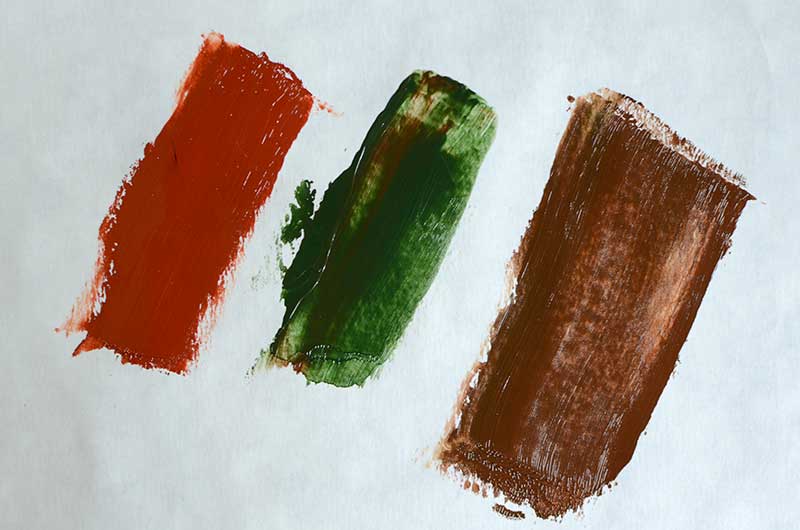
Venetian Red mixed with Terre Verte create a shadow color.
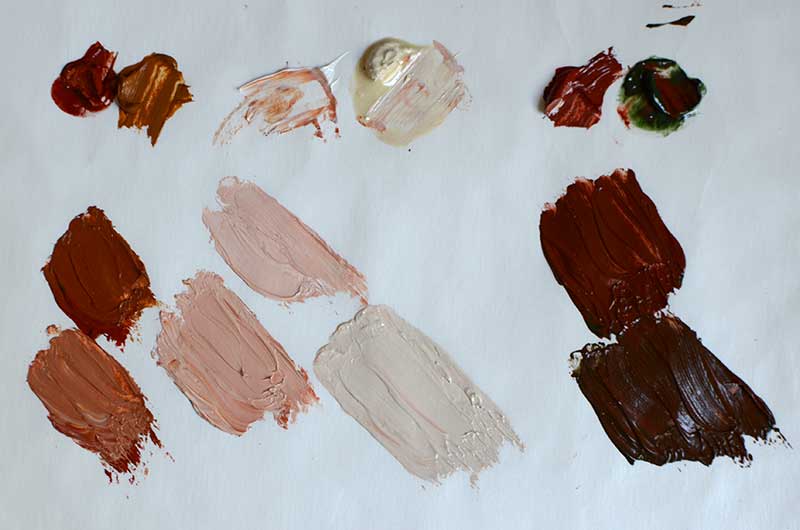
A range of skin tone values can be pre-mixed before painting.
Pre-Mix a Range of Values for Consistency Across the Form
Pre-mix lights/mids/darks from one base to avoid inconsistencies (human eyes spot "off" tones easily). Limit pigments to avoid chromatic mud.
The Pigment & Perceptual Science of Mixing Skin Tones
Skin tone mixing in oil replicates the complex optics of human skin. Light can scatter or reflect in a way that makes the outermost layer appear translucent. Areas rich in hemoglobin, such as the nose, cheeks, and ears, may look reddish or pink. Melanin contributes yellow and brown tones to the skin. Overall, skin has a desaturated, multi-hued appearance with subtle shifts between warm and cool tones. To approximate skin's reddish tones, a mixture of Venetian Red with a base is effective. Lightening the mixture with white (such as Flake White Replacement or Unbleached Titanium) dilutes the chroma and increases the value without excessively cooling the tone. Temperature adjustments are necessary. Small additions of blue paint shift the base toward cooler violet-red (countering warm light bias in shadows via simultaneous contrast). Naples Yellow can be added to enhance warmth in illuminated areas. Pink accents (Cadmium Red Light or Permanent Rose) target hemoglobin-rich zones. High tinting strength require minute additions to avoid overpowering. Complementary toning (blue for orange) reduces saturation via subtractive mixing, mimicking natural effects. Shadow darkening with Terre Verte + Ultramarine adds cool green-blue undertones that simulate venous blood and reduced illumination, enhancing depth through value and hue contrast. Veins may appear greenish under certain light. Pre-mixing value ranges ensures consistency across the painting. Human vision detects subtle inconsistencies as "off". Limiting pigments avoids chromatic noise and muddiness from excess color mixing. This process may help train overriding assumptions like "skin is peach" for accurate, lifelike reproduction of real skin’s chromatic and luminous variation.
Conclusion: Experiment with Your Palette for Natural, Believable Flesh Tones
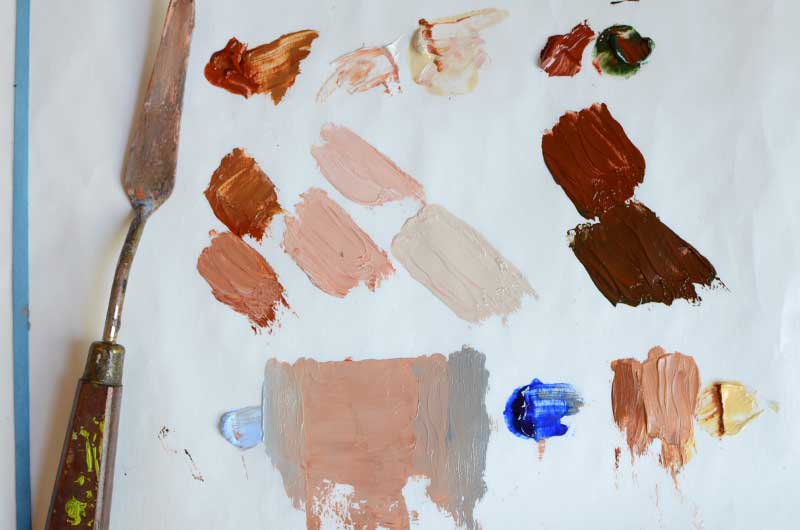
How do you make skin color paint? What colors make skin tone? How to mix skin colour paint? Use the process above—start with a neutral base (Venetian Red + Raw Sienna or primaries), tint with white, adjust temperature (yellow/blue), add pinks, neutralize with complements, darken shadows. One example works, but experiment with your palette for any skin tone (light, tan, dark, how to make tan skin color with paint, etc.).
Related Topics:
Begin A Portrait
Skin Tone Oil Paint
What Colors Make Flesh Color?
What Colours Make Skin Tones