Mixing Perfect Pink in Oil Paint: Reds, Whites, Temperature Adjustments, and Techniques
What Colors Make Pink? The Basics of Red + White in Oils
Choosing the Right Reds: Warm, Cool, and Mid-Tone Options
What Colors Make Pink? The Basics of Red + White in Oils
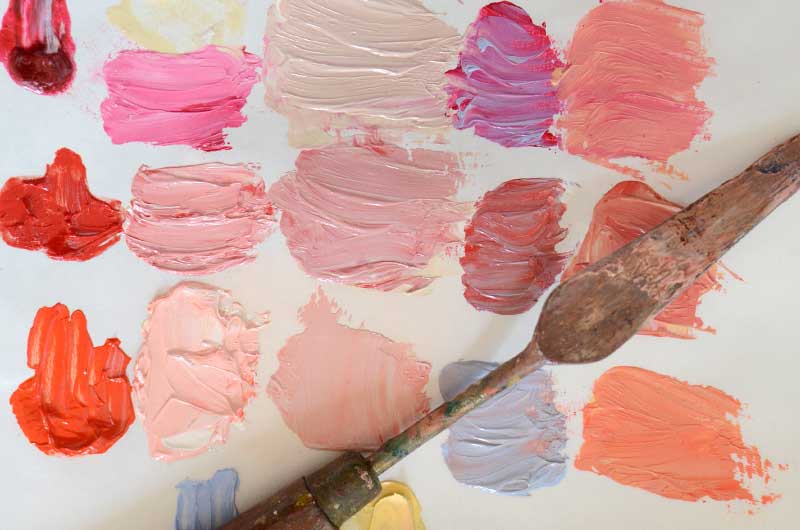
What colors make pink? Pink is created by combining red and white. However, in oil painting, it's more complex. There are cool pinks, warm pinks, saturated and vibrant pinks, as well as muted natural flesh-tone pinks. An artist must understand how to mix all of them.
Choosing the Right Reds: Warm, Cool, and Mid-Tone Options
Explore the wide variety of red oil paint colors available. Select several different reds to add variety to your paint palette. I recommend having one warm red, such as Cadmium Red Light, which has a slight orange tone. Permanent Rose is a good option for a cool red. I think that Cadmium Red falls somewhere in the middle, so it's also good to have on hand.
High Tinting Strength: Why a Little Red Goes a Long Way
Red oil paint colors often possess a high-tinting strength, meaning that only a small amount of red is needed to turn a pile of white paint into a lovely pink.
Selecting the Best White for Your Pink Shade
There are many different white paint colors to choose from, and the shade of pink you create will be influenced by the white color you use. I like to use Flake White Replacement for portraits. Another good option is Unbleached Titanium, which is a natural-looking white with a hint of beige. It's worth noting that a pink mixed with Flake White Replacement will look different from a pink mixed with Unbleached Titanium.
Adjusting Temperature: Cool with Radiant Blue, Warm with Naples Yellow
Once a pink paint color has been mixed, you can adjust the color temperature by adding a small amount of Radiant Blue to make it cooler or Naples Yellow to make it warmer.
Specific Pink Mixes: Vibrant Cool, Warm Orange-Toned, and Classic Standard
When you combine Permanent Rose or Alizarin Crimson with white, you'll get a vibrant, cool pink color.
Cadmium Red Light combined with white will create a warm pink with a slight orange tone.
When combined with white, Cadmium Red will produce what is typically considered a standard shade of pink.
The Color Science of Mixing Pink in Oil Paint
Pink mixing in oil relies on subtractive color theory and pigment interaction. Red pigments (e.g., Cadmium Red Light, Quinacridone Rose) absorb shorter blue/green wavelengths, reflecting longer red/orange light; combining with white (titanium dioxide or lead carbonate alternatives) dilutes chroma and increases lightness, creating desaturated magenta-to-peach tones. Warm reds have an orange bias and yield coral or peachy pinks. Cool quinacridone or alizarin reds produce violet-leaning rose pinks. White choice matters: Flake White Replacement (titanium-zinc blends) offers neutral cool tinting; Unbleached Titanium adds subtle yellow-brown undertone, warming the mix slightly. Temperature adjustments like the addition of Radiant Blue shift toward cooler violet-red, while Naples Yellow introduces yellow bias, warming toward orange-red. High tinting strength of cadmiums and quinacridones means minute amounts dominate white. It's easy to overshoot with a paint color that has high tinting strength. Subtle color variations can mimic real-world skin and flower reflectance, where subsurface scattering and multiple pigment layers create perceptual richness. Overly uniform mixes appear flat as they lack natural chromatic noise. Experimentation trains the artist to match colors, overriding symbolic "pink = red + white" assumptions for more accurate, vibrant, and believable results.
Conclusion: Experiment with Red and White Variations for Custom Pinks
When red and white are combined, they create pink. However, the shade of pink can differ significantly based on the specific shades of red and white paint used. I suggest having a variety of red paint colors on hand to help you achieve the perfect shade of pink for your project. With some practice and experimentation with different color combinations, you can learn to mix beautiful pink hues for your artwork.
Related Topics:
Make Skin Tone With Paint
Skin Tone Oil Paint
What Colors Make Flesh Color?
What Colours Make Skin Tones
Blending Colors In Oil